


Description
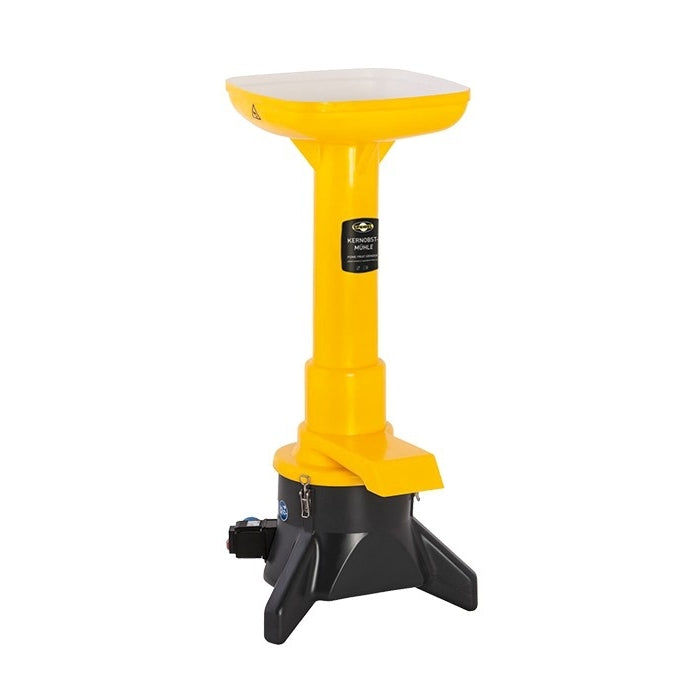
Speidel fruit mill – electric mill for apples and pears for cider
The Speidel fruit mill cuts pome fruit such as apples and pears into pieces of the right size: not too coarse and not too fine. This gives a high juice yield when you press for cider, and rapid fermentation when the mash is fermented. The mill runs on a standard 230 V socket and handles up to 1,000 kg of fruit per hour.
The mill is too large and heavy to ship as a parcel and is therefore shipped on a pallet.
Easy to use
The large hopper makes it easy to fill fruit straight from the crate. Cleaning is simple: remove the hopper and hose down the mill and hopper with water. The mill is virtually maintenance-free, but the blades should be sharpened from time to time.
Safety
The mill complies with applicable European safety standards and is CE marked. It has a motor protection switch that trips on overload, a hopper with reach-in protection and switch-on lock, and a PE shield that protects the blades and motor against tampering and water splashes.
Features
- 2.2 kW motor
- hopper, motor block, blades, apron and legs in rust-free materials that need no special treatment
- made in Germany
- certified food safe
Technical data
- hopper: yellow, durable PE plastic (recyclable)
- lower section: black, durable PE plastic (recyclable)
- motor: 230 V, 50 Hz, 2.2 kW, 2800 rpm
- on/off: switch with switch-on lock
- connection: 230 V, 50 Hz, Schuko plug
- cutter unit: reversible blades in hardened stainless steel that can be reground
- capacity: up to 1,000 kg per hour
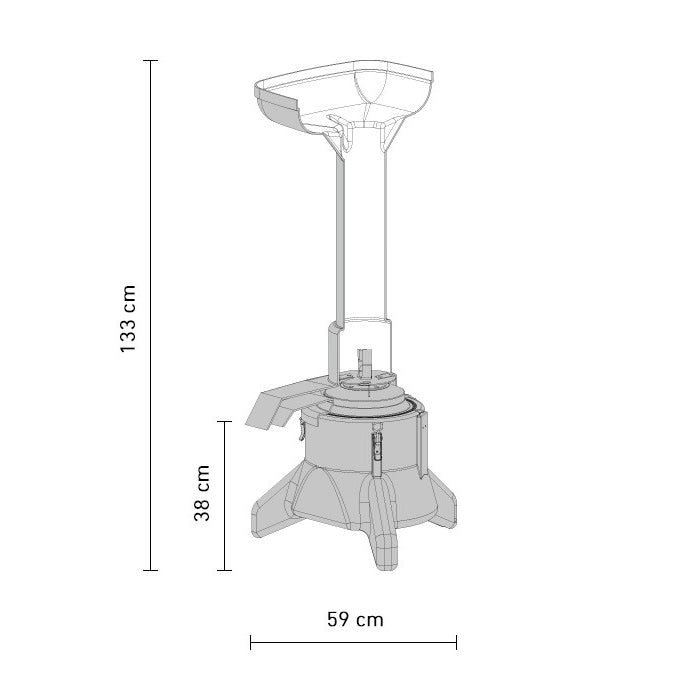
- width: 59 cm
- height: 133 cm
- outlet height: 38 cm
- weight: 25 kg
Frequently asked questions about the Speidel fruit mill
How much fruit can the mill handle?
Up to 1,000 kg of fruit per hour. The large hopper lets you fill fruit straight from the crate.
What power supply do I need?
A standard 230 V, 50 Hz socket. The mill has a Schuko plug and a 2.2 kW motor.
How do I maintain the mill?
Remove the hopper and hose the mill down with water after use. The blades are reversible and can be reground, and they should be sharpened from time to time.
What do I do with the mash afterwards?
The mash is pressed into juice, for example in a Speidel Hydropress. The juice can then be fermented into cider.
Related
Betaling
Your payment information is processed securely. We do not store credit card details nor have access to your credit card information.