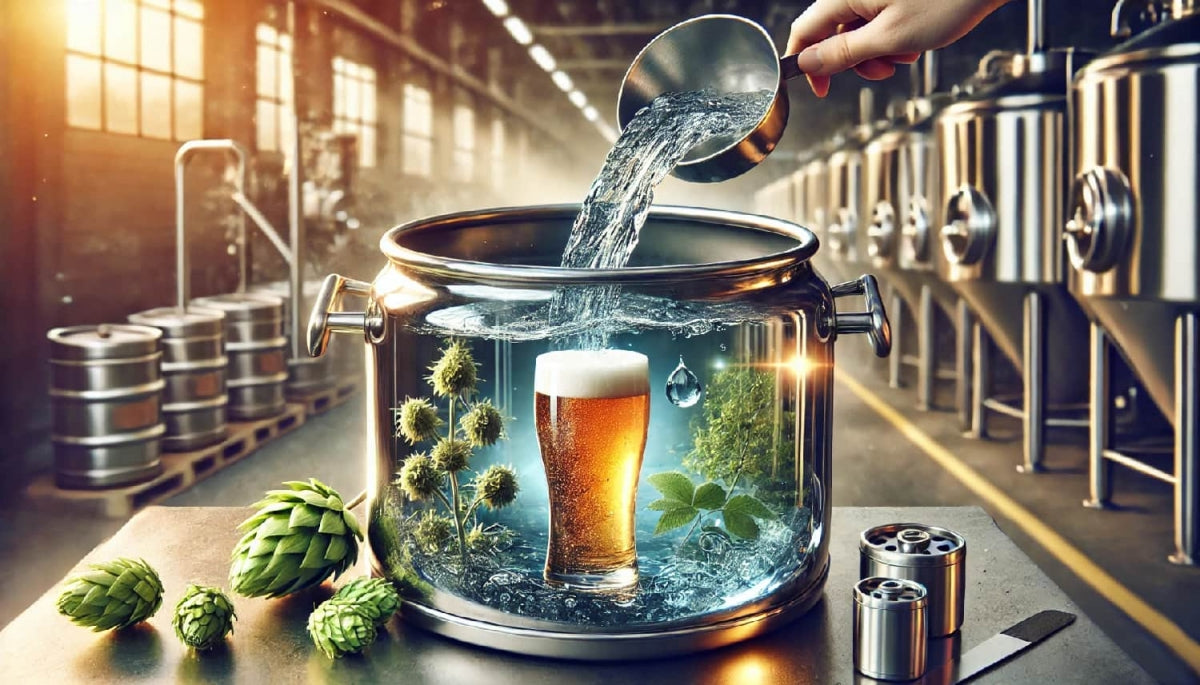
Homebrewing has become a popular hobby among beer enthusiasts, but even experienced brewers can overlook one crucial factor that really separates a good beer from an exceptional one – water chemistry.
Water, which makes up 90 % of your beer, is far from neutral – it contains minerals that can lift or hold back the flavour and clarity of your beer. This article looks at how water adjustment can improve your homebrewing, and how tools such as Brewfather can make the process easier for those who do not want to dive deep into water reports.
Why is water adjustment so important in brewing?
Water is not just a neutral element in brewing. It plays an active role in shaping the flavour and balance of your beer. The natural minerals found in water – such as calcium, magnesium, chloride, sulphate and bicarbonate – affect how malt, hops and yeast interact, and can either enhance or reduce the flavours you are trying to bring out.
The mineral balance of the water is especially important because it can affect everything from mouthfeel and aroma to how the beer is perceived on the palate. Without the right water profile, even the best brewing methods and the freshest ingredients may not give the result you want.
Water profiles for different beer styles
Different beer styles need different water profiles to bring out their characteristic flavours. For example:
- IPA: IPAs need a water profile with a high sulphate level to give a sharper hop bitterness. This enhances the hop flavour and gives the beer a clean finish.
- Pilsner: This paler beer style does best with soft water with a low mineral content, which gives a crisp and clean flavour.
- Stout and porter: Darker beers benefit from higher bicarbonate levels, which balance the acidity of the dark malt and give a rounder mouthfeel.
Water adjustment for homebrewers
For those who want to fine-tune their beer, water adjustment starts with understanding the chemical composition of the water. Usually this means getting a water report from your water supplier, or testing well water if you live somewhere more rural. But this process can seem complicated to many, and this is where tools such as Brewfather come into the picture.
Brewfather – a tool for easy water adjustment
If you find it challenging to interpret a water report and decide which minerals to add, Brewfather can be an invaluable aid. Brewfather is a popular brewing app that makes water adjustment easy by pulling together the information you need, without you having to analyse complex data yourself. Here is how it works:
- Water adjustment made easy: In Brewfather you can enter information about your water (or choose a preset profile for water from different regions), and the app will calculate what you need to add to reach a specific water profile for the beer style you are brewing.
- Integrated calculators: Brewfather has built-in calculators that show how much of each mineral to add (such as calcium sulphate, calcium chloride or bicarbonate) to match the desired profile, based on the volume of your wort.
- Predefined water profiles: The app has preset water profiles for popular beer styles, so you can choose the style you want to brew and then adapt your water to that style without having to work it out yourself.
This makes Brewfather a practical tool for both beginners and experienced brewers who want to improve the quality of their beer without spending a lot of time understanding the details of water chemistry.
How do you adjust water for brewing?
1. Choose an approach to get an overview of your water: Depending on how deep you want to go into water adjustment, you have two main options. If you want a quick and simple solution, you can use Brewfather's predefined water profiles. These profiles are tailored to different beer styles, so you do not have to deal with complex water reports. Choose the beer style you are brewing, and Brewfather will automatically recommend a suitable water profile to adjust your water to.
For those who want to go deeper, you can start from a water report. You can get this report from your local water supplier or have your water tested by a laboratory. The report will show the levels of calcium, magnesium, sulphate, chloride and bicarbonate in your water. Using this information, you can fine-tune your water precisely to the beer style you are brewing, which gives you full control over the mineral balance.
2. Use Brewfather to adjust the water:
Once you have chosen your approach, either with a predefined water profile or based on a water report, you can use Brewfather to enter the data and have the necessary additions calculated. Brewfather automatically calculates what you need to add to reach an optimal water profile. This can include common additions such as:
- Calcium sulphate (gypsum): To raise the sulphate level and bring out the hop character.
- Calcium chloride: To give the beer a fuller body and bring out malt sweetness.
- Sodium bicarbonate: To balance pH and reduce acidity, especially in dark beer styles such as stout and porter.
3. Adjust the pH: The optimal pH during the mash is around 5.2–5.6. If the pH is too high or too low, it can affect the conversion of starch to sugar and lead to inefficient brewing. It is most common to use lactic acid (or phosphoric acid) to lower the pH, or sodium bicarbonate to raise it.
Why water adjustment can improve your homebrewing
Often the difference between a decent beer and a truly good beer is control over the water. Adjusting your water chemistry can dramatically improve the flavour profile, clarity and balance of your beer. Even small adjustments can take your beer from mediocre to outstanding.
For many brewers who are already getting good results, water adjustment is what can take their brewing to the next level. With the right water profile you can bring out the unique characteristics of each ingredient and optimise the beer for maximum flavour, balance and clarity.
Brewshop's fresh wort kits – easier brewing with ready-adjusted water
For brewers with limited time or space, Brewshop's fresh wort kits are an ideal alternative. With 20 litres of finished wort already precisely water-adjusted by Austmann Bryggeri and Amundsen Bryggeri, you skip both the brewing and the challenge of adapting the water chemistry yourself. This makes it as easy as possible to make quality beer at home – you just add yeast and start fermentation. The wort is precisely adjusted for optimal flavour and balance, so you avoid potential mistakes such as incorrect water adjustment or contamination that can occur if you add water yourself.
Conclusion: Water is a critical ingredient in brewing, and by understanding and adjusting your water chemistry you can drastically improve the quality of your beer. With simple tools such as Brewfather, water adjustment becomes easier and more accessible, so you can concentrate on creating beer with the perfect balance and flavour.
Here you will find our range of products for water adjustment for homebrewers. If you brew on a larger scale, check out our range of water adjustment for breweries.