If you are a homebrewer, you will know that mashing is a key step in the brewing process. It is in this phase that the starch in the malt is converted into sugar that the yeast can ferment. A successful mash can be what separates a mediocre beer from an excellent one. Let us take a closer look at this essential part of brewing, and at the potential advantages and disadvantages of mashing for longer or overnight.
What happens during the mash?
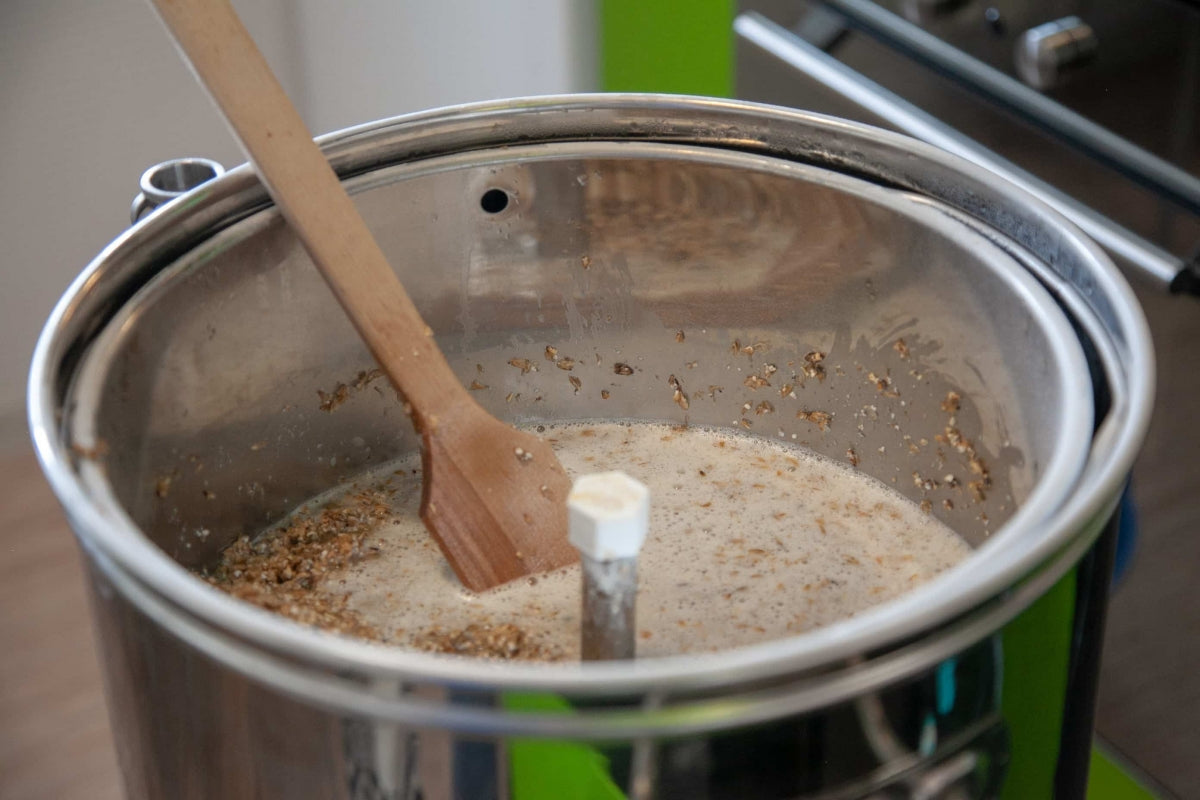
During the mash, the malt is mixed with hot water. This activates the enzymes in the malt and helps them break down the starch into fermentable sugar.
The quality of the ingredients matters here. Freshly crushed quality malt is the key to a successful mash, and you will find a wide range of malt from quality producers at Brewshop. Water quality is also important, as the quality and mineral content of your water can affect the flavour of the finished beer. If you want to learn more about water adjustment, you can read our article on Water adjustment when brewing beer.
Important factors during the mash
Temperature
One important thing to consider when mashing is the temperature. To achieve optimal enzyme activity, the mash is usually carried out at a temperature between 63–68 degrees Celsius. Here both alpha- and beta-amylase, the two most important enzymes in the mash, are active and effective at converting the starch into sugar.
Mash pH
Another important factor is the pH. The ideal pH for mashing is between 5.2 and 5.6. At this pH the enzymes work best, and you get better conversion of starch to sugar.
Mashing for 1 hour vs. a long mash / overnight
Traditionally, the mash takes around an hour. This is roughly how long it takes for the enzymes to break down most of the starch in the malt into fermentable sugar.
But what happens if you mash for longer, for example overnight? Will it give a better result? The answer is not entirely clear, and it can vary depending on your specific recipe and method.
Advantages of a long mash can include:
Increased efficiency: By giving the enzymes more time to break down the starch, you can potentially achieve higher efficiency in the mash. This means you can extract more sugar from the same amount of malt. A long mash can also contribute to a lower FG (final gravity), which can result in a beer that ferments out further and has a higher alcohol content.
Time-saving: A long mash can add more flexibility to the brewing process. You can, for example, start the mash in the morning or the evening before, and then continue brewing when you get home from work. This way you can save time on heating and mashing.
Disadvantages of a long mash can include:
Fire risk: With a long mash, especially overnight, there can be an increased fire risk if the mash gets stuck and the heating element runs dry. It is important to keep this in mind to ensure a safe brewing process.
Increased risk of extracting unwanted flavours: With a long mash there can be a risk that unwanted flavours, such as tannins, are extracted from the husks of the grain. These tannins can give the beer a bitter or astringent taste.
Microbial growth: Beer is a nutrient-rich environment, and if you leave the mash for too long, it can increase the risk of microbial growth, especially if the temperature drops below 50 degrees Celsius. This can lead to a lower pH due to lactobacillus, and result in a sour beer.
Possible loss of enzyme activity: There is a limit to how much extra sugar you can actually extract, even with more time. Enzymes can also start to lose their activity over time, especially if they are exposed to heat for too long.
Long mash with dark malt: Advantages and disadvantages
If your grain bill contains a significant proportion of dark malt, there may be some additional considerations when it comes to a long mash.
Dark malt has already been through intense heat treatment during malting. This means that a good deal of the starches have already been converted into simpler sugars and that enzyme activity is lower compared with paler malts. So there is less starch available to break down in the mash, and the effect of a longer mash may be less noticeable.
But there are also some potential advantages and disadvantages to mashing dark malt overnight:
Advantages:
Bringing out complex flavours: A long mash can help bring out the complex flavours in dark malt, such as chocolate, coffee and caramel. This can give your beer a richer and deeper flavour profile.
Potentially improved clarity: Some brewers claim that a longer mash can help improve the clarity of the finished beer by giving the proteins more time to flocculate (clump together) and thus be removed more easily.
Disadvantages:
Extraction of unwanted flavours: Dark malt tends to have a higher tannin content. With a long mash there can be a risk that these tannins, which can give a bitter and astringent taste, are extracted to a greater extent.
Colour change: A longer mash can also potentially lead to changes in the colour of the beer. Dark malt gives a darker beer, and a longer mash can intensify this further.
Mashing in summary
Mashing is both a science and an art. It is one of the most crucial steps in the brewing process, and there are many factors to consider to make sure you get the best results. The quality of the ingredients, the temperature and the pH are all crucial for a successful mash. Whether you should mash for an hour, several hours or overnight depends on a number of factors and your personal preference. Good temperature control on your brewing system is also important, so it is worth checking with an external thermometer whether the temperature controller on your system is accurate. It is not always as precise on the cheapest brewing systems. But remember, the most important thing is to experiment, learn and have fun with your brewing!
If you need ingredients, equipment or advice for homebrewing, Brewshop has the largest range in Norway and is ready to help you. Just get in touch with us if you need advice.
Finally, we can also recommend our article on mash efficiency vs brewhouse efficiency.