
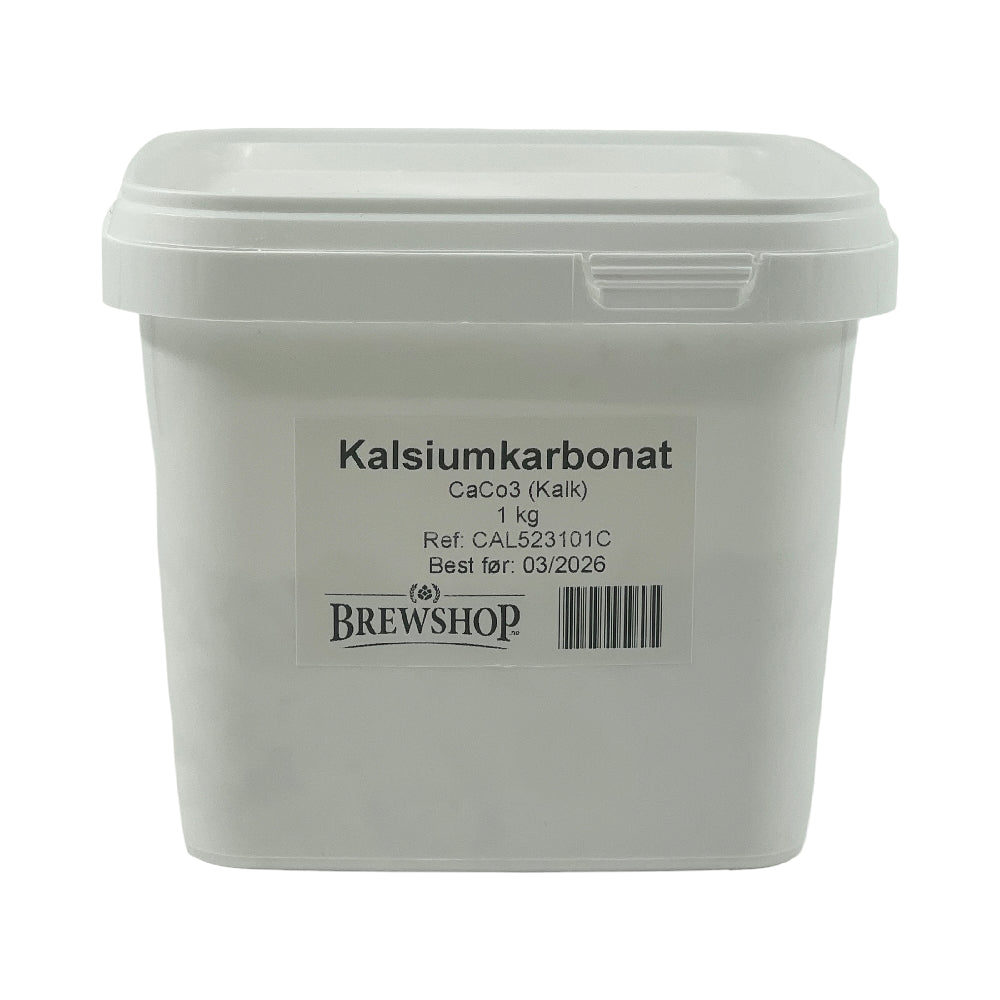

Description
Calcium carbonate (chalk) 1 kg – raises mash pH
Calcium carbonate, CaCO3, also known as chalk, is used in water treatment to raise the pH of the mash. It is especially useful in dark beers, where dark malt pulls the pH down. It also adds calcium, which the yeast needs.
How to use calcium carbonate
- 1 g per 10 litres of water gives 100 mg/l calcium carbonate, which is about 40 mg/l calcium and about 60 mg/l carbonate.
- Mix the salt with the grain in the mash.
- Calcium carbonate needs an acidic environment to dissolve and does not belong in the sparge water.
- Calculate the amount with brewing software such as Brewfather, based on your water profile and beer style.
Technical data
- Chemical formula: CaCO3
- Contents: 1 kg
Frequently asked questions about calcium carbonate
When should I use calcium carbonate?
When the mash pH is too low, typically in dark beers such as stout and porter where dark malt pulls the pH down. The ideal mash pH is 5.2–5.6.
How much calcium carbonate should I use?
1 g per 10 litres of water gives 100 mg/l calcium carbonate, which is about 40 mg/l calcium and about 60 mg/l carbonate. How much you need depends on your water and the beer style. Brewing software such as Brewfather calculates it.
Can I add calcium carbonate to the sparge water?
No. Calcium carbonate needs an acidic environment to dissolve and should be mixed with the grain in the mash.
What is the difference between calcium carbonate and calcium sulphate or calcium chloride?
Calcium carbonate raises pH. Calcium sulphate and calcium chloride lower pH and are used to accentuate hops and body respectively.
Related
Betaling
Your payment information is processed securely. We do not store credit card details nor have access to your credit card information.