Fresh Wort Kits have revolutionised homebrewing for many people. With pre-boiled, water-adjusted wort straight from professional breweries, you can skip large parts of the technical brewing process and go straight to what matters most: fermentation. But what many people do not realise is that even though you can get started with little equipment, temperature control during fermentation is still absolutely crucial for the quality of the finished beer – also when brewing with a Fresh Wort Kit.
Read more about fresh wort kits, and why to buy them from Brewshop
Why fermentation matters – and why temperature plays the lead role
Fermentation is the very heart of the brewing process. This is where the sugar in the wort is converted into alcohol and flavour compounds. But it is also where the risk of the beer picking up unwanted flavours is greatest. Temperature plays a key role, because yeast is a living microorganism that is very sensitive to the temperature it works in.
Too high a temperature can cause the yeast to produce too many esters and fusel alcohols – which in turn give the beer a character of overripe fruit or spirits. Too low a temperature can lead to sluggish or incomplete fermentation, reducing flavour and attenuation. In both cases the result can be disappointing, even if you started with high-quality wort.
Fresh Wort Kits give you the advantage of professionally brewed wort – but the yeast still does the most important work at your home. That is why it is crucial to give it the best possible working conditions.
Simple solutions for precise temperature control
You do not need an advanced setup to control the temperature effectively. Here are some of the most accessible and popular solutions:
Fridge or freezer + Inkbird – the classic and effective combination
A used fridge or freezer can easily be turned into a very effective fermentation chamber. By connecting it to an Inkbird temperature controller, you have full control over the temperature throughout fermentation.
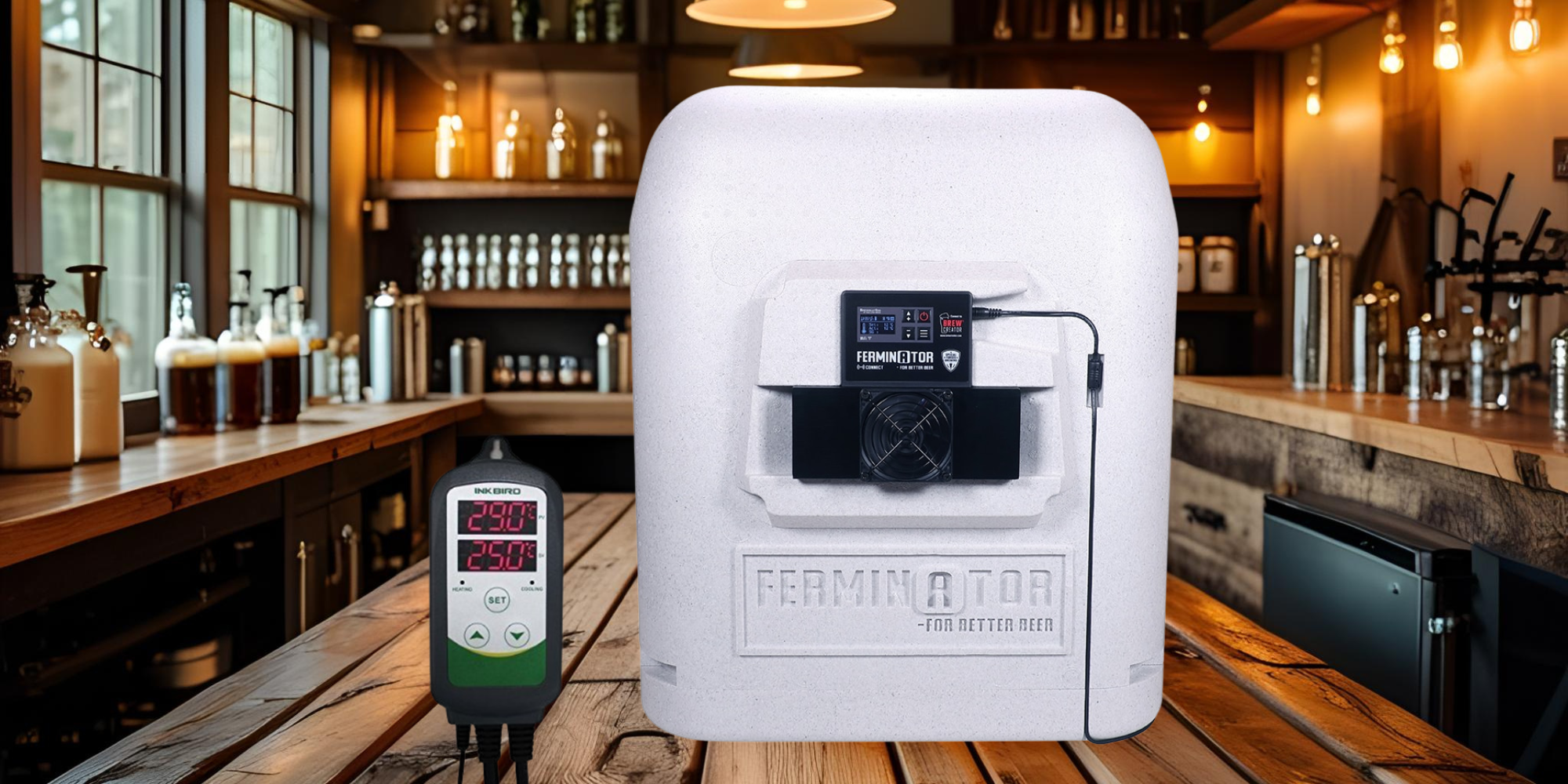
The Inkbird ITC-308 WiFi lets you set the temperature you want, and automatically switches the power to the fridge and/or a heating element on and off to keep the temperature stable. This gives you a predictable and professional result without a big investment.
Do you have a cool cellar? Perfect – then the Inkbird can keep a stable fermentation temperature by controlling a panel heater or heating element when needed.
Click here to read more about the Inkbird temperature controller.
Fercubator – affordable, effective and popular with homebrewers
Another very good option is the Fercubator (formerly known as the Ferminator) from the Danish company Brewolution. This is a dedicated fermentation chamber with both cooling and heating, specially developed for homebrewers.
The Fercubator gives you the flexibility to ferment in both summer and winter, without depending on having a fridge or freezer available. You set the temperature you want on the built-in controller, and the unit keeps the temperature stable – simple and precise.
It is designed to hold standard fermenters and kegs, and has become a very popular choice for those who want to take fermentation control a step further without investing in larger cooling solutions. If you use larger tanks, the Fercubator can also be extended with extension modules.
Click here to read more about the Fercubator fermentation chamber.
Glycol chiller – for those who want maximum power and precision
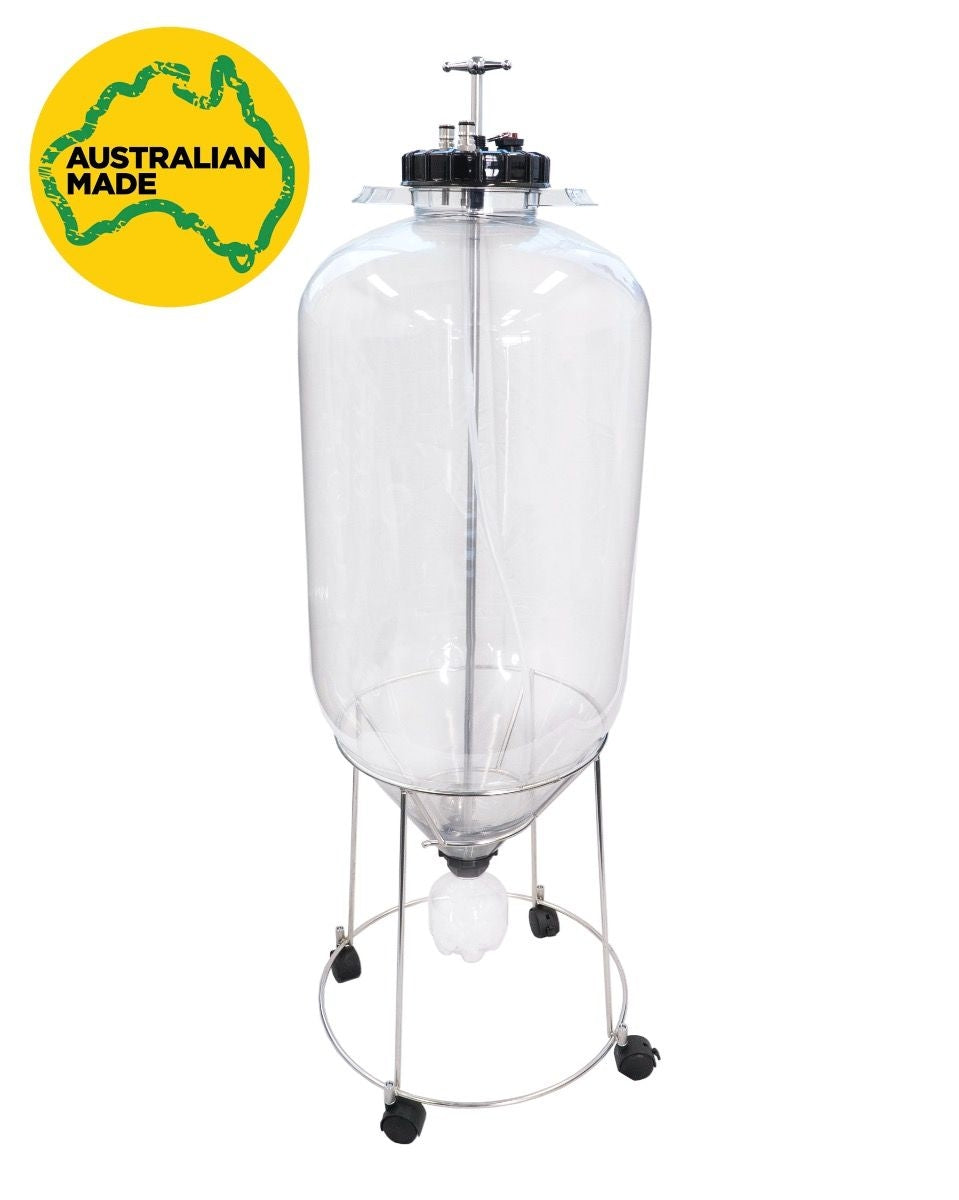
If you use conical fermenters with a cooling jacket or cooling coil, a glycol chiller can give you the most precise temperature control available for home use.
With a glycol chiller you can hold an even and stable temperature, and you can easily carry out a cold crash – lowering the temperature after fermentation to clear the beer and get yeast and hop residue to drop to the bottom. This gives you a visibly clearer beer with less sediment when packaging.
Although glycol cooling is a more advanced solution, it is a popular next upgrade for many who started brewing with Fresh Wort Kits and have discovered the joy of consistent quality in their beer.
See our range of glycol chillers.
What about cold crashing?
Cold crashing is a technique where, once fermentation is complete, you lower the temperature drastically (typically to 0–2 °C) for a few days. The aim is to clear the beer by getting as much yeast and as many particles as possible to settle out before packaging.
To cold crash effectively, you need a system that can hold such low temperatures stably – such as a fridge/freezer controlled by an Inkbird, a Fercubator or a glycol chiller. This is a step many skip at first, but it is a simple technique that improves the look of the beer and makes it easier to bottle or transfer to a keg.
Summary – make the most of a simple setup
Fresh Wort Kits are a fantastic way to get started with homebrewing – and many people are surprised at how good the beer can be, even with minimal equipment. But one thing separates the decent results from the really good ones: a controlled and stable fermentation temperature.
You do not need expensive or advanced equipment. A used fridge and an Inkbird temperature controller can give you good control. If you want a plug-and-play solution, the Fercubator is an obvious choice. And for those who want to take it all a step further, glycol cooling is an investment in maximum precision.
Whatever level you are at: once you have good wort in the bucket, your yeast deserves the best possible conditions. You will taste it – every single time.